This study of Niẓāmī’s (d. 1209) Makhzan ul-asrār (Treasure of Mysteries) deals with problems of the work’s history and reception, analyzing the formal setting of the poem as well as its stylistic elements, in particular its rich and difficult imagery. This demands a detailed examination of the alternately reflective, homiletic, and narrative textual structure of Makhzan ul-asrār, of Niẓāmī’s virtuoso technique of forming chains of associations, and of the didactic topics. Finally, the study provides a translation with commentary of the twenty parables, included by Niẓāmī in his first Mathnawī.
Gegenstand dieser Untersuchung ist das didaktische Mathnawi Makhzan ul-asrar („Die Schatzkammer der Geheimnisse“), das erste große Werk des persischen Dichters Nizami (gest. 1209). Im Blickpunkt des Interesses stehen zunächst Fragen der Werkgeschichte: Datierung, Widmungsträger, Hinweise auf Nizamis Biographie und die poetische Tradition, in der Makhzan ul-asrar steht, ferner die Rezeption des Werks im persisch-türkisch-indischen Raum sowie im europäischen Westen. Anschließend stellt die Studie anhand von Beispielen den formalen Aufbau dieser Dichtung Nizamis dar und analysiert die in Makhzan ul-asrar angewandten rhetorisch-poetischen Verfahren, namentlich die reiche und schwierige Metaphorik, die ein bestimmendes Merkmal dieses Erstlingswerks ist. Weitere Schwerpunkte der Untersuchung sind die wechselweise beschreibend-reflektierende, homiletische und narrative Textstruktur des Werks, Nizamis virtuose und Interaktion mit dem Rezipienten bedingende Technik der Bildung von Assoziationsketten durch Schlüsselbegriffe und die didaktischen Hauptthemen des Werks (Lob des Propheten, Rang der Dichtkunst, die Reise ins eigene Herz, Wahrung der Gerechtigkeit, Aufforderung zum Weltverzicht, apokalyptische Vision und Endzeiterwartung). Den Abschluss der Studie bildet eine kommentierte Übersetzung der zwanzig von Nizami in Makhzan ul-asrar eingefügten Gleichniserzählungen unter Berücksichtigung der Textkritik und Motivgeschichte.
Makhzan ul-asrar steht, vor allem was die westliche Rezeption betrifft, eher im Schatten der übrigen Werke Nizamis und wird oft als Entwicklungsschritt hin zu seinen großen Epen betrachtet. Ziel dieser Studie ist es, einen neuen Zugang zu dieser so viele Reichtümer bergenden „Schatzkammer“ zu eröffnen und die Bedeutung, die Nizamis erstes Mathnawi für dessen künstlerische Entwicklung sowie für die persische didaktische Dichtung überhaupt besitzt, darzulegen.
“This study on Nizami’s Makhzan al-asrar (hereafter MA), orginally a “Habilitationsschrift” at the university of Basel in 1997, is not only the first full-length one dedicated to this poet’s most difficult matnawi, but moreover, by its soundness and subtlety, by far the best study devoted to him since a long time. (...)
This (...) does not detract from the overall value of Würsch’s study; nobody who does any research on Nizami or literature of that period in general can afford to ignore it. One fears of course that, because it is written in German, it will not have the impact it certainly deserves; it is my hope that this review makes clear that this would be a loss for scholarship.”
Anna Livia Beelaert
In: Middle Eastern Literatures. 13 (2010) 1, pp. 124-126.
http://dx.doi.org/10.1080/14752620903566236(24. April 2013)
-----------------------------
“Würsch’s study is profound and comprehensive in the way it tackles Nezami’s “Makhzan al-asrar”. What is very interesting and extremely useful for the students of Nezami is her in-depth and elaborate analysis of individual couplets. In this book, she deals with a large number of difficult passages and couplets of Nezami’s “Makhzan al-asrar”, giving the original Persian, variant readings to be fofund in different editions and a German translation. Although the book is a must for all specialists and lovers of Nezami, it is extremely useful for students of medieval Islamic studies to see how central religious and political topics such as the prophet Mohammed’s message, kingship, just government, renunciation of the world, etc. were presented in a very virtuous presentation of intricate metaphors and a host of other figures of speech.”
Ali Asghar Seyed Gohrab
In: Bibliotheca Orientalis. 67 (2010) No. 1-2. Column 226-228.
-----------------------------
“This book (...) represents a courageous and very convincing effort to counter the prejudices against didactical poetry. Renate Würsch has made a profound study of almost every aspect of the poem as it can be shown by a brief survey of her main chapters. (...)
Prof. Würsch had succeeded in building a treasure house of her own which contains much more precious things than can be enumerated here. Many excursions explore the background of the materials from which this poet derived his imagery. One of the structural features invented by Nizami is the insertion of his pen name in the conclusion of each of the twenty „maqalas“. (...)
With this important monograph Renate Würsch has laid a solid foundation for further critical researches on Nizami’s firstling, which contains the most diffcult specimens of his poetic art. The book is densely written and addresses of course a specialist readership which is familiar with scholarly German. The range of its response could be considerably enlarged when it would be translated, preferably both into Persian and English. Hopefully, we will not have to wait too long for this.”
J.T.P. De Bruijn
In: Persica. No. 22 (2008). S. 65-67.
Literatures in Context is a peer-reviewed book series devoted to Near Eastern and North African literatures. The editors want the title of the series to be understood programmatically. They presuppose a concept of world literature that includes Near Eastern and North African literatures. What is more, they assume that literatures are in many ways marked by intertextuality, that they constitute readings of extremely diverse earlier texts, and that they are posited within a field of tensions, much broader than their respective national language. For the earlier eras of Near Eastern and North African literatures, this field of tensions geographically covers the regions of the Southern and Eastern Mediterranean and Asia Minor. In modern times, it has become a space of interaction that has long since included “global” Western literatures (and realities). This does not imply that the modern Near Eastern and North African literatures have severed themselves from their predecessors. Instead it is precisely the tension between different sets of references in modern Near Eastern and North African literatures, or their “local historical context”, which is a great part of their attraction, that remains a crucial field of research for the modern scholar.

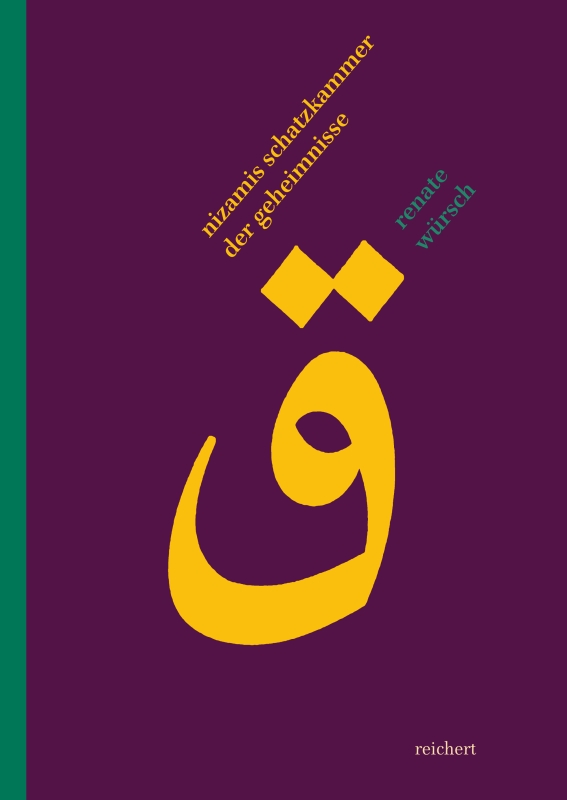
 Table of Contents