The book is devoted to the subject of the Arab reception of Franz Kafka between 1939 and today. The study focuses on the examination of Kafka and his work in the form of intellectual reflective commentaries. It deals with the productive reception and presents modern Arabic literary works which were somehow inspired by or close to the writing of Kafka. The central question of reception as a process of cultural translation includes the preoccupation with Kafka’s Jewish affiliation in the context of the Jewish Arab conflict, tracing back the modern Arab history of thought with all its varieties via such indirect ways of reception.
„Atef Botros’ description and explanation of the Arab Kafka provides us with an enlightening characterization of the so called „crisis of Arab identity“ (…) I do not know of any similar profound access to the neurotic obsessions [e.g. Arab mental blockades in the reception of the Jewish] in the context of the „Jewish“ than his detailed analysis.“
Prof. Georg Meggle (German Philosopher, Leipzig)
„The book warns of the decline of a long hermeneutical tradition into a literary discourse which is bound in political stereotypes. The writer wants to preserve the moments in which Kafka’s oeuvre is very close to the modern literary tradition of the Arab world and in which he became a source of progressive thought in Egypt.“
Galili Shahar, Haaretz, 29.09.2008
Regardless of skin color, religion, language and place, everyone feels close to this ill friend who lived in Prague, composed his work in German, but whose massage survived despite his early death; his name is Franz Kafka”, wrote the German Iraqi writer NaÊm WÁlÐ. In a poem of the Palestinian poet Mahmoud Darwish Kafka seems to be even closer to Arab reality: “I found Kafka sleeping under my skin, in accord with our garb of nightmare and the police in us”. The 1988 Nobel Prize holder, Naguib Mahfouz, wrote: “I have known Kafka for more than forty years, but I encountered (faced/met) him first particularly after the Arab defeat of 1967”.
Since 1939, in the Arab world Kafka’s oeuvre has been read, commented on, translated and quite controversially discussed: whether through identification, appropriation, literary inspiration, projection, misunderstanding, or politicization. But it is only in 1946 that he became more famous when the eminent Egyptian writer, Taha Husain introduced him to the public in a series of articles. His comments on Kafka can be conceived as a part of his secularization project.
While in the 1960s Kafka achieved a special significance in the Arab world, the east European polemic against him had been more and more exacerbated in the context of the Cold War. Stimulated by those polemics and in the course of the rising Arab anti-Zionism the question of Kafka’s attitude to Zionism arose from 1971 on. As a Jewish writer who was predominantly on the move among the Zionist circles of Prague, his reception became more complicated and difficult after the rise of the Middle East conflict.
This study is concerned with the entire history of reception, focusing on the significant contest of Arab intellectuals and beyond to point this reception in context of the modern Arab History of thought. In this respect the study can be considered part of a future-oriented research, which deals with exchange processes, the transfer of ideas, cultural translation, and overlapping and interference between Europe and the Arab area. However, these spheres are not considered opposites.
„Dieser Band befasst sich mit der Rezeption Kafkas in der arabischen Weilt - mit Schwerpunkt Ägypten - von 1939 an bis in die jüngere Gegenwart. Der Autor bemüht sich um eine objektive Studie mit kulturhistorischem Hintergrund, in der europäische und arabische Sicht gleichermaßen zum Ausdruck kommen.“
Renata Malina
In: Wiener Zeitschrift für die Kunde des Morgenlandes. (2012). Band 102. S. 379-380.
-------------------------
„Die Studie (...) rekonstruiert die Rezeptionsgeschichte Kafkas im arabischen Raum auf drei Ebenen: der Übersetzung, der Literaturkritik und der produktiven Rezeption mit dem Schwerpunkt der Analyse auf der zweiten Ebene. Der zeitliche Rahmen erstreckt sich dabei von 1939 bis zur Gegenwart. Als theoretische Grundlage dient dem Verf. die Rezeptionstheorie von H. R. Jauß’. Im Zentrum der Arbeit kristallisiert sich die politisierte Kernfrage nach dem Judentum K.s heraus: Wie gehen arabische Intellektuelle mit der jüdischen Zugehörigkeit K.s um und wie verhält sich die spezifische Rezeption des „Jüdischen“ zum historischen Kontext des Nahen Ostens? Der Verf. skizziert und problematisiert drei Phasen der K.-Rezeption: 1. die frühe Rezeptionsperiode mit einer integrativen K.-Aufnahme von 1939-1963 (Georges Henein, Taha Husain), 2. die Popularisierungsperiode der 1960er Jahre (Nabila Ibrahim, Mustafa Maher) und 3. die politisierte, reduzierende Phase ab 1971 (Zionismusdebatte). In Anbetracht der kaum vorhandenen Forschung über K.s Wirkung im arabischen Raum, stellt die Studie einen wichtigen Forschungsbeitrag dar, der die kulturellen Austauschbeziehungen zwischen Europa und der arabischen Welt am Beispiel der K.-Rezeption zu Tage fördert.“
Bettina Rabelhofer
In: Germanistik. 52 (2011) 1-2. S. 341.
--------------------------------------
„Botros hat mit seiner Rezeptionsstudie eine Forschungslücke geschlossen und zugleich neue, vielversprechende Perspektiven für ähnliche und weiterführende Fragestellungen eröffnet. Dieses Buch ist nicht nur eine beachtliche Leistung, sondern stellt auch den Versuch dar, die (arabische und deutsche) Kafka-Rezeption selbst auf eine neue Ebene zu heben und dadurch letztlich die derzeit so virulente Spannung zwischen den Adjektiven „jüdisch“ und „arabisch“ für ein (wissenschafts)politisches Verständigungsprojekt produktiv zu machen, das seinem Fluchtpunkt im Nahostkonflikt hat. Ein in jeder Hinsicht begrüßenswertes Unterfangen.“
Kathrin Wittler
In: Orientalistische Literaturzeitung. 106 (2011) 1. S. 57-59.
--------------------------------------
„(...) seine profunde und umfassende literaturwissenschaftliche Analyse der arabischen Kafka-Rezeption schließt mit einem leidenschaftlichen Appell für Frieden im Nahen Osten. Doch dabei leidet die Wissenschaftlichkeit des Werkes in keiner Weise, vielmehr befruchten sich eine engagierte, kritische Sicht auf den Konflikt im Nahen Osten und brillante literaturwissenschaftliche Analyse gegenseitig und geben dem Buch so seine genuine Qualität. (...)
Botros öffnet so auf eindrucksvolle Weise, über den Umweg der Rezeption, einen intellektuellen Zugang zum Verständnis des Konflikts im Nahen Osten. Und genau diese Mehrdimensionalität der Arbeit ist es, die es dem Autor ermöglicht, seine fundierte wissenschaftliche Analyse der arabischen Rezeption des jüdischen Literaten Kafka in dem emotionalen Appell und Wunsch enden zu lassen, dass "alle Seiten des Konfliktes endlich reuend feststellen […]: 'Ein Missverständnis ist es, und wir gehen daran zugrunde'".
Das Buch richtet sich sowohl an das Fachpublikum als auch an den interessierten Laien. Es besticht daher durch seine klare Beschreibung der komplexen Rezeptionsvorgänge. Die Einbettung seiner Untersuchungen in eine umfassende Betrachtung arabischer Geistesgeschichte des 20. Jahrhunderts lässt das Werk auch ohne tiefgreifende Vorkenntnisse verständlich erscheinen.
Kategorisieren lässt sich "Kafka, ein jüdischer Schriftsteller aus arabischer Sicht" mit einem Wort also nicht: das Buch ist sowohl eine eingehende, komplexe Analyse transkultureller Rezeptionsprozesse und eine historisch-präzise, profunde literaturwissenschaftliche Arbeit, als auch ein Appell, den Konflikt im Nahen Osten in einem neuen Licht zu sehen. Welchen Aspekt man auch betonen oder herauslesen möchte – die Lektüre lohnt sich auf jeden Fall.
Von Julian Tangermann
In: Qantara.
http://de.qantara.de/webcom/show_article.php/_c-299/_nr-802/i.html(8. Juni 2010)
Eine englische Version der Rezension findet sich unter:
http://en.qantara.de/webcom/show_article.php/_c-310/_nr-758/i.html(8. Juni 2010)
--------------------------------------
„Einen facettenreichen „arabischen Kafka“ entdeckt zu haben, ist das Verdienst des ägytpischen Literaturwissenschaftlers Atef Botros.“
Von Wolf Lepenies
In: Die Welt.
http://www.welt.de/die-welt/kultur/article7107156/Kafka-von-Arabien.html(9. April 2010)
Atef Botros, Dr. phil.
since 2007 assistant professor at the Arabic Studies Department of the Center for Middle Eastern Studies at the University of Marburg (Germany), studied German Literature at the Heinrich-Heine University of Düsseldorf. In 2000, he completed his master thesis on “The 'Jewish' in the work of Frank Kafka”. Four years later he presented his doctoral thesis in the field of Comparative Literature, Arabic Studies and Cultural Studies on the Arab reception of Franz Kafka. From 2001 to 2004, he held a scholarship of the Heinrich-Böll Foundation. From 2003 to 2004, he was a staff member of the research group “Language, Identity, Collectivity: Language-Philosophical Transformations of Jewish Existence” at the Simon-Dubnow Institute for Jewish History and Culture, University of Leipzig. After his dissertation he worked as research fellow at the Georg Eckert Institute for international textbook research in Braunschweig. His main fields of research are modern Arabic literature and history of thought. His projects include issues like secularity, sacrality and violence in the modern Arabic novel as well as contemporary Arabic Literature as medium of collective remembrance.
Literatures in Context is a peer-reviewed book series devoted to Near Eastern and North African literatures. The editors want the title of the series to be understood programmatically. They presuppose a concept of world literature that includes Near Eastern and North African literatures. What is more, they assume that literatures are in many ways marked by intertextuality, that they constitute readings of extremely diverse earlier texts, and that they are posited within a field of tensions, much broader than their respective national language. For the earlier eras of Near Eastern and North African literatures, this field of tensions geographically covers the regions of the Southern and Eastern Mediterranean and Asia Minor. In modern times, it has become a space of interaction that has long since included “global” Western literatures (and realities). This does not imply that the modern Near Eastern and North African literatures have severed themselves from their predecessors. Instead it is precisely the tension between different sets of references in modern Near Eastern and North African literatures, or their “local historical context”, which is a great part of their attraction, that remains a crucial field of research for the modern scholar.

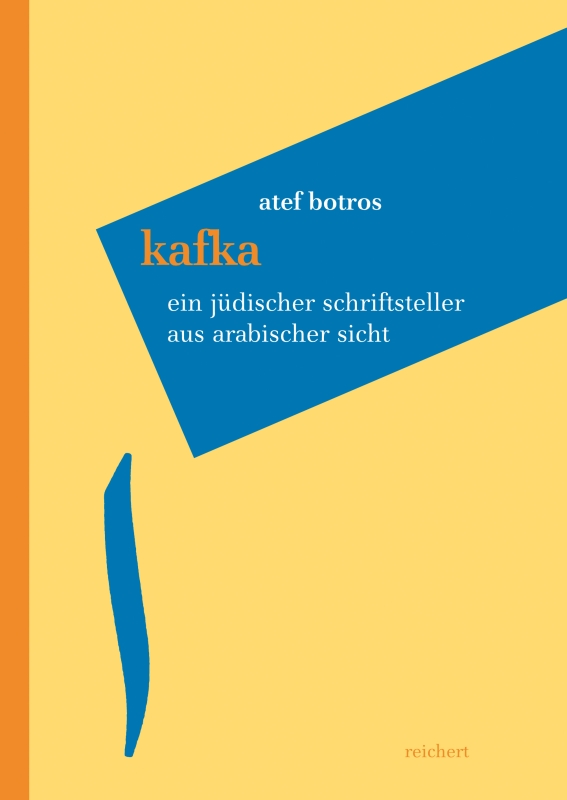
 Table of Contents