The volume presents articles from different academic fields. The geographical focus lies on the Eastern Mediterranean, its chronological framework comprises mainly the 9th to 13th century. The collected articles share a common approach inviting the reader to think across the established academic and institutional boundaries of Islamic and Byzantine art history and neighbouring disciplines. The Eastern Mediterranean is presented as an area that has been shaped by lasting processes of cultural interchange inducing an »osmosis« of artistic forms of expression.
The title of the present publication reflects the concern of its publishers. It is an invitation to think and to collaborate across the established academic and institutional boundaries of Islamic and Byzantine art history and neighbouring disciplines. Contemporary scholarship is often still framed in terms of traditional ethnic, linguistic or religious categories, fields of scholarship are defined in terms of territory or politics. Loose labels such as »Byzantine«, »Arab«, »Christian« or »Muslim« are used as if they described homogenous, self-contained units. Alternatively the present publication introduces the idea of a cultural »osmosis«. Instead of just thinking in terms of giving or receiving, of immediate mutual influence of motives, vocabulary of forms, technique etc. rather more general considerations about the exploration of transcultural processes of transmission and transformation might be developed, that negotiate artistic and human differences across traditional boundaries. Eight authors from the fields of Near Eastern Archaeology (STEFAN HAUSER), Byzantine Art History (ARNE EFFENBERGER, NESLIHAN ASUTAY-EFFENBERGER, ANTJE BOSSELMANN-RUICKBIE, ULRIKE KOENEN) and Islamic Art History (AVINOAM SHALEM, MARTINA MÜLLER-WIENER) illustrate in exemplary fashion transcultural processes of transmission and transformation. The geographical focus of the collected essays lies on the Eastern Mediterranean, their chronological framework comprises the 6th to 15th century. The essays are supplemented by introductory remarks that attempt a non-comprehensive overview of relevant studies, concentrating on subjects of artistic exchange, interaction and cultural hybridity.
Vorwort
Prolog zum Thema Grenzgänge
„Crossing Borders“ - summary of introductory remarks
Stefan Hauser
„Die Christen vermehrten sich in Persien und bauten Kirchen und Klöster“.
Eine Archäologie des Christentums im Sasanidenreich
Avinoam Shalem
Wie byzantinisch war der Schatz der Fatimiden?
Antje Bosselmann-Ruickbie
Byzantinisch, islamisch oder „Internationaler Stil“?
Email- und Körbchenohrringe aus dem östlichen Mittelmeerraum
Ulrike Koenen
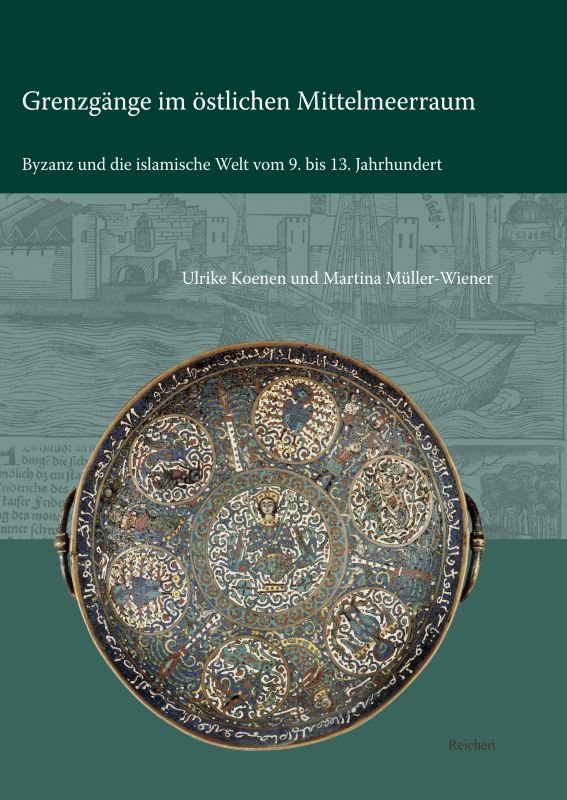
Die Artukiden-Schale im Innsbrucker Ferdinandeum als Zeugnis der „Grenzgänge“ im östlichen Mittelmeergebiet. Bemerkungen zur Methodik der byzantinischen Kunstgeschichte
Martina Müller-Wiener
Im Kontext gesehen - Die Artukiden-Schale und das „classical revival“ in Nordsyrien und der Gazira
Neslihan Asutay-Effenberger
Spuren seldschukischen Lebensstils in der imperialen Architektur Konstantinopels im 12. Jahrhundert
Arne Effenberger
Konstantinopel / Istanbul: Zum Wandel des Stadbildes in Veduten des 15. Jahrhunderts und zu den Minaretten der Hagia Sophia
„Im Einzelnen versammelt der Band gewichtige, präzise Spezialstudien (...). Diese Fallstudien erbringen im Speziellen wichtige Ergebnisse (...).
Gewürdigt sei im Folgenden allerdings vor allem die Gesamtleistung des Bandes, der 1. Disziplinen miteinander ins Gespräch bringt, die, wie die Geschichte und Kunstgeschichte der islamischen Welt und des byzantinischen Reiches, im Gefolge disziplinärer Ausdifferenzierungen im 19. Jahrhundert als Spezialgebiete entweder dem Kompetenzbereich der Byzantinistik bzw. der byzantinischen Kunstgeschichte oder der Orientalistik bzw. orientalischen Kunstgeschichte zugeordnet wurden und bis weit in die zweite Hälfte des 20. Jahrhunderts hinein wenig in Austausch miteinander standen.
Damit wird 2. ein Beitrag zur Geschichte des Mittelmeerraum im Mittelalter geleistet, der in Deutschland) anders als beispielsweise in Frankreich) bis vor wenigen Jahren weitgehend nicht als ein Sprachen- und Religionsgrenzen übergreifendes, kulturelles oder geographisches Gefüge gedacht und erforscht wurde. Erst in jüngerer zeit erlebt die Geschichte des
Mediterraneums im Mittelalter Konjunktur, was sich nicht zuletzt in der Gründung von Forschungszentren und -gruppen mit mediterranistischer Schwerpunktsetzung widerspiegelt. Die vorliegende Studie aus dem Jahr 2008 nimmt in dieser Hinsicht bereits eine Vorreiterrolle ein.
3. In den Blick genommen wird ein Zeitabschnitt mediterraner Geschichte, der in zahlreichen Mittelmeerstudien eine untergeordnete Rolle spielt. Spätestens seit der Arbeit von Horden/Purcell hat sich das Merkmal der „connectivity“ für die Geschichte des Mittelmeerraums durchgesetzt. Bestimmte historische Phasen sind für das Konnektivitätsmodell besonders attraktiv (...)
Das frühe Mittelalter bzw. die Phase vor den Kreuzzügen wird allerdings in Studien zur Geschichte des Mediterraneums, nicht nur in Deutschland, nach wie vor wenig berücksichtigt. In der Forschung wird beispielsweise das 10. Jahrhundert sogar nach wie vor häufig als Periode des „Zerfalls der mediterranen Welt“ beschrieben. Die kunsthistorischen und archäologischen Beiträge des Sammelbandes hingegen belegen die Intensität der Kontakte vor allem zwischen dem byzantinischen Reich, Süditalien, Spanien und Nordafrika. Sie führen präzis und zugleich anschaulich den Motiv- (...) und Techniktransfer und das „gemeinsame Werden“ künstlerischer Ausdrucksformen im östlichen Mittelmeerraum vor Augen; damit leistet der Band nicht zuletzt einen wichtigen Beitrag zu Erforschung und Erschließung des zu unrecht weniger berücksichtigten Frühmittelalters in der Geschichte des Mittelmeerraums.“
Jenny Rahel Oesterle,
In: Orientalistische Literaturzeitung. 106 (2011) 4-5. S. 303-304.
---------------------------------
„Das Buch weist neue Wege zum Verständnis von Phänomenen, für die die gängigen Etikette von Epochen und Kulturzugehörigkeiten nicht taugen. Gelegentlich bleibt die Diktion noch hinter der Theorie zurück, wenn Formulierungen wie "kultureller Austausch" oder "Transfer der Techniken und Motive" mit dem Postulat kollidieren, dass es sich im östlichen Mittelmeerraum und im Vorderen Orient um einen Raum handelte, der von gemeinsamen Traditionen geprägt war und in dem Kulturen symbiotisch existierten.
Zunächst würde man sich wohl weitere Einzelstudien wünschen, die diesen Ansatz verfeinern und explizieren: Man könnte sich Untersuchungen zur Buchmalerei vorstellen, zur christlichen und islamischen Architektur im Raum Mossul, zu den Beziehungen zwischen der Kunst der orientalischen Kreuzfahrerstaaten und der sizilischen Normannen. Ob sich dann auch neue Etikette einstellen, die vielleicht zu einer neuen Periodisierung und Klassifizierung führen, ist eher von nachrangiger Bedeutung.“
In: Sehepunkte. 9 (2009) Nr. 6.
http://www.sehepunkte.de/2009/06/14686.html (19.06.2009)
NESLIHAN ASUTAY-EFFENBERGER
Born in İstanbul. 1979-1985 undergraduate and graduate studies in Art History, Byzantine and Turkish-Islamic Art History, and English Philology at Istanbul University. 1986 until 1993 graduate studies in Art History, Christian Archaeology and Oriental Art History at the Rheinische Friedrich Wilhelms-University Bonn. 1993 Ph.D. at Bonn University on “Templon systems in the cave churches of Cappadocia”. 2005 postdoctoral qualification at FU-Berlin published under the title “Die Landmauer von Konstantinopel-İstanbul. Historisch-topographische und baugeschichtliche Untersuchungen”. Lectureships at Mainz University (1993), at the department of Asiatic and Islamic Art History in Bonn (since 1999) and at the department of Byzantine Studies at FU Berlin. Author of several publications on Byzantine and Turkish-Islamic art and architecture.
ANTJE BOSSELMANN-RUICKBIE
Works on a self-employed basis as art historian. Undergraduate and graduate studies in Art History, Classical Archaeology, Christian Archaeology and Ancient History at the Rheinische Friedrich Wilhelms-University Bonn. M.A. 1994 on “Technical and stylistic criteria for the assessment of Byzantine churches of the Comnenian period” under the direction of Professor Dr. Horst Hallensleben. Ph.D. on “Byzantine jewellery from the 9th to the 13th century”, directed by Professor Dr. Barbara Schellewald and supported by a Ph.D. grant of the Gerda Henkel Foundation Düsseldorf. The Ph.D. thesis was awarded the “Juliana-Anicia-prize 2007” of the society for “Late Antique Archaeology and Byzantine Art History”, Munich.
ARNE EFFENBERGER
Born at Weimar. 1961-1966 undergraduate and graduate studies in Classical Archaeology, Prehistoric Archaeology at Humboldt-University in Berlin. 1969 Ph.D. at the Martin-Luther-University Halle-Wittenberg on “Studies on the Tyche of Antiochia”. 1966 research assistant at the State Museum Berlin (East). 1973 Director of the Early-Christian and Byzantine department. 1994-2007 Director of the Collection of sculptures and the Museum of Byzantine Art. Managing Director of the general restoration and installation plan of the Bode-Museum. Lectureships at Humboldt-University Berlin (1983-84), at Marburg University (1989) and Bonn (1991-92). Since 1996 professorship at FU-Berlin. Author of several exhibitions and publications on late-antique and Byzantine art.
STEFAN R. HAUSER
Director of a subproject within the special research unit “Difference and integration: interaction between nomadic and settled forms of life” located at Halle-University. M.A. in Classical Archaeology, Ph.D. in Near-Eastern Archaeology (1994). Fellow for Byzantine Studies at Dumbarton Oaks and Senior Fellow at the Center for Advanced Study in the Visual Arts at the National Gallery of Art, Washington, DC. Lectureships at Münster and Halle University and at the Columbia University in New York. Author of publications on the social structure of the Neo-Assyrian period (postdoctoral qualification, Halle 2007) and on the production of luxury goods during the 5th–7th c. AD in the Mediterranean. His research focuses on the archaeology and history of the postcuneiform cultures in the Near-East and on the history of science.
ULRIKE KOENEN
Undergraduate and graduate studies in Art History, Classical and Early Christian Archaeology, and Byzantine Art at Bonn and Cologne. M.A. in Christian Archaeology, Ph.D. in Art history. Adj. professor in Christian Archaeology and Byzantine Art History at Halle University. Worked as research assistant at the Franz Dölger-Institute and at the Institute for the History of the Arts in Bonn. Lectureships in Bonn, Eichstätt and Bochum. DFG (German-Research-Foundation) project “Byzantine works of art in German collections”. Research grant of the Gerda Henkel Foundation “The reception of Byzantine works of art in the Medieval West”. Author of publications on the iconography of Early-Christian Genesis-Cycles and their reception in the Middle ages, on the history of Byzantine ivories and enamels in the West and on the survival and reception of late-antique ivories in the early middle ages.
MARTINA MÜLLER-WIENER
Undergraduate and graduate studies in Islamic studies, Islamic philology, Art History and Ethnology at Frankfurt and Mainz. 1991 Ph.D. at the Johannes Gutenberg-University Mainz on “A history of the city of Alexandria 564/1169 until the middle of the 9th/15th centuries. Administration and urban organisation”. 1991-1993 curatorial-assistant at the Islamic department of the Museum for Applied Arts in Frankfurt. 1993-1998 work on a self-employed basis as museum-curator. 1998-2008 research assistant at the Department of Asian and Islamic Art at the Rheinische Friedrich-Wilhelms-University Bonn. Her specialisation lies on the relationship between art, science and technique and on Islamic astronomical instruments and automates. Apart from that her research focuses on Islamic pottery and ceramics. Regular participation in archaeological field-work projects in Syria and Afghanistan. Author of several publications on Islamic pottery, on scientific instruments and on the iconography of Islamic art.
AVINOAM SHALEM
Undergraduate and graduate studies in Art History and Byzantine Art History at Tel Aviv and Munich. Ph.D. in History of Islamic Art at Edinburgh 1995 published under the title Islam Christianized. Islamic Portable Objects in the Medieval church treasuries of the Latin west, Peter Lang, Frankfurt, second edition 1998. Author of the publication “The Oliphant” (Brill, Leiden 2004) and editor of “Fact and Islamic Artefacts” (Brill, Leiden 2007). Lectureships at the Universities of Edinburgh, Munich and Bamberg and at the University for Jewish Studies at Heidelberg. Since 2002 professor for the History of Islamic Art at the Ludwig Maximilians University Munich, since 2007 Max-Planck-Professor at the Institute for Art History in Florence.

 Sample