Literary works are much more than mere illustrations of societal conditions. Literature is the setting in which society discusses itself. In this volume, international scholars of Literary Studies as well as specialists in Arabic, Hebrew, Persian and Turkish Studies explore the dimensions and ways of how writers, from the classical period to modernity, tackle the values of their societies.
Literary works are much more than mere illustrations of societal conditions. Literature is the setting in which society discusses itself. In this volume, international scholars of Literary Studies as well as specialists in Arabic, Hebrew, Persian and Turkish Studies explore the dimensions and ways of how writers, from the classical period to modernity, tackled the values of their societies.
From the contents: Religious Norms Advocating / Domesticating Literary Freedom - Literary Norms and the Travelling of Genres - Linguistic Norms: Writing in the ‘Stepmother Tongue’ - Gender Norms, Inverted and Subverted - Societal Norms I: The Poet Involved - Societal Norms II: Imagining Communities, Debating the Collective
„Die Beiträge stammen aus Vorlesungen zum Block „Literatur und Gesellschaft im Vorderen Orient“ an der Freien Universität Berlin, die 2003 auf einem internationalen Workshop im Berliner „Haus der Kulturen der Welt“ präsentiert wurden. Es ging darum, darzustellen, wie Schriftsteller die sozialen Verhältnisse ihres Landes reflektieren. Ein komplexes Feld, das 9 Beiträge (davon fünf in deutscher Sprache) abzustecken versuchen. Zunächst werden einige Werke der klassischen arabischen Literatur auf religiöse Normen hin untersucht. Dann geht es um die Verbreitung von literarischen Normen innerhalb der islamischen Welt. Im Teil „Linguistische Normen“ beschäftigt sich Doris Ruhe mit frankophonen Schriftstellern Algeriens und ihrer Verarbeitung der nachkolonialen Schwierigkeiten, wobei sie ausführlicher auf Mohammed Dib und Assia Djebar eingeht. Andere Beiträge behandeln jüdische irakische Schriftsteller in Israel. Die nächsten Abschnitte haben „Gender und Normen“ sowie „Gesellschaftliche Norme“ zum Thema.“
in: DAVO Nachrichten. 25 (2007). S. 123.
Literatures in Context is a peer-reviewed book series devoted to Near Eastern and North African literatures. The editors want the title of the series to be understood programmatically. They presuppose a concept of world literature that includes Near Eastern and North African literatures. What is more, they assume that literatures are in many ways marked by intertextuality, that they constitute readings of extremely diverse earlier texts, and that they are posited within a field of tensions, much broader than their respective national language. For the earlier eras of Near Eastern and North African literatures, this field of tensions geographically covers the regions of the Southern and Eastern Mediterranean and Asia Minor. In modern times, it has become a space of interaction that has long since included “global” Western literatures (and realities). This does not imply that the modern Near Eastern and North African literatures have severed themselves from their predecessors. Instead it is precisely the tension between different sets of references in modern Near Eastern and North African literatures, or their “local historical context”, which is a great part of their attraction, that remains a crucial field of research for the modern scholar.

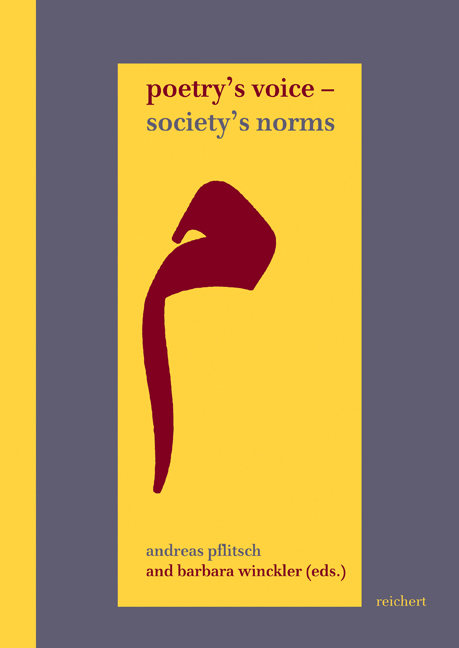
 Table of Contents