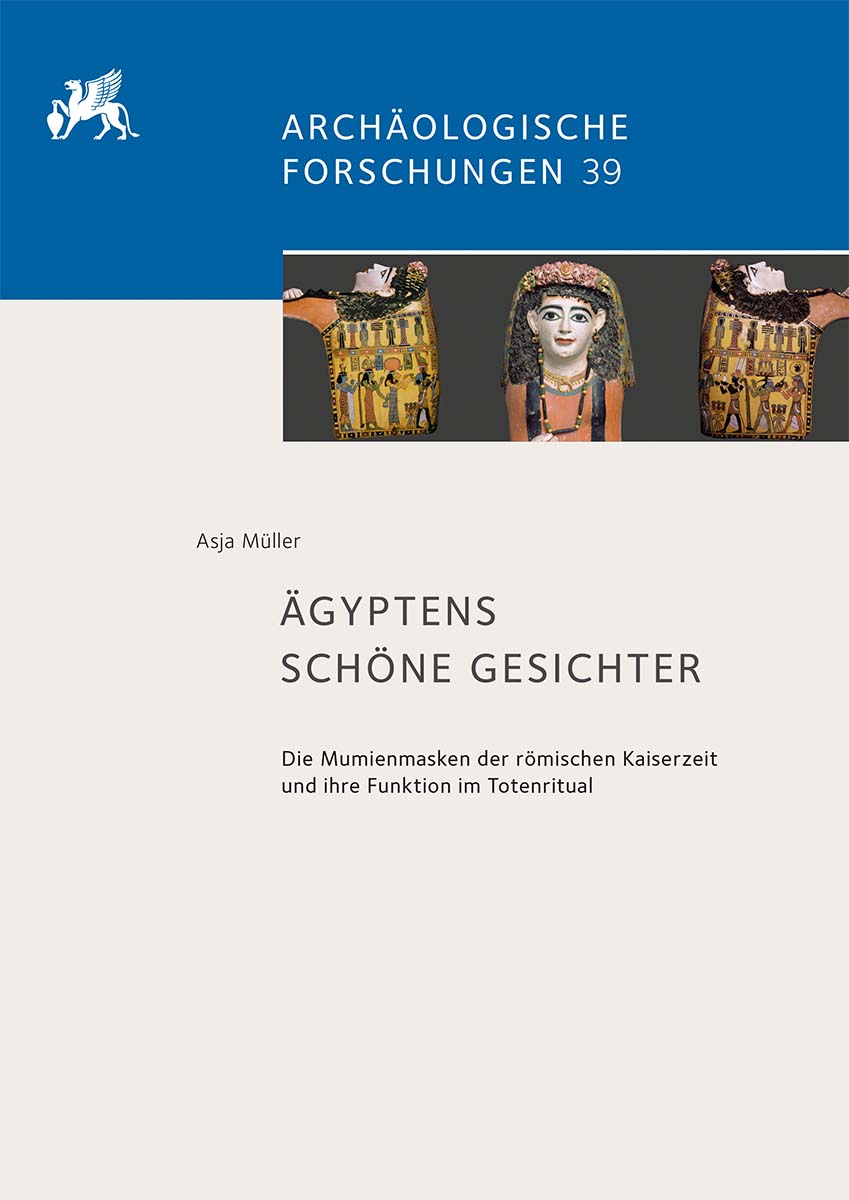
How do mummy masks act? This question is the starting point for the present investigation, consciously aiming towards a new perspective of research. In contrast to the modern point of view, mummy masks cannot simply be regarded as inanimate objects, but should rather be seen as autonomous entities. Depending on the particular context, they could become subjects and were therefore regarded as agents equal to human beings in antiquity. Therefore, the book seeks to explore how mummy masks acquired such a status and in which situations this happened.
How do mummy masks act? This question is the starting point of the present study, which aims at a change of perspective. Contrary to the prevailing view, mummy masks are regarded here, not as lifeless objects, but as independent entities that could acquire subject status depending on the context in which they were used. In antiquity a mummy mask was an actor of equal status. Investigating how mummy masks were able to become empowered actors and which contexts this occurred in is the primary subject of this book.
To answer this question, three different types of source are evaluated: the outward appearance of the mummy mask (mask body, decorative program, inscriptions), its archaeological context (workshop group, find assemblage in the grave) as well as the ancient texts (documentary papyri, Book of the Dead, embalming ritual, opening of the mouth ritual, book of transformations). A mummy mask’s agency, which can be described as material, communicative and magical, is effective in all these sources, albeit in profoundly different ways. Aspects of portraiture and corporeality are expressed in the outward appearance of the mummy mask, while the communicative agency that it exerts was closely related to its visibility and accessibility in the grave context. The precondition for the magical agency in contrast was its ritual activation during the funeral ceremony and funerary cult.
Consideration of all these aspects makes it possible to describe the status of a mummy mask as patient and agent in different contexts and to identify what role it was accorded as an active medium of cultural exchange in the Hellenistic-Roman koine of the Mediterranean region.
„[…] The range of aspects that the author has covered with so much knowledge and methodological rigour is truly impressive, and she offers for the first time a more holistic approach to an important part of Egyptian culture of the imperial period. One could easily imagine a researcher running out of steam after collecting the evidence and describing and analysing the masks and their decoration. What makes this book so much more than
a convenient presentation of material is the insistence that the masks had a function; and that they integrated well into millennia-old religious traditions and beliefs, where they could assume magical powers and support the transition of the deceased into a living divine being. In doing so, Asja Müller has also demonstrated that these masks should be of interest not just to art historians and archaeologists, but to historians as well, since they contribute to our wider understanding of Roman Egypt and its societies. While a German book of 428 pages may look intimidating to non-native speakers, it is worth the effort of engaging with it, and both the clear and accessible writing style and the conclusions (Auswertung) following each sub-section are helpful.“
By Barbara E. Borg
In: Bonner Jahrbücher, Bd. 221 (2021), S. 335-339
Asja Müller
Since 2018: Assistant Professor at the Institute of Classical Archaeology, Freie Universität Berlin; Studies of Classical Archaeology, Prehistoric Archaeology, Experimental Archaeology and Egyptology at Leipzig and Exeter (UK); PhD Kiel 2017; Postdoc Research Fellow CRC 1266, project E3 at the Institute of Classical Studies / Classical Archaeology, CAU Kiel, 2016‒2017; Travel Scholarship of the German Archaeological Institute 2017‒2018; research foci: Graeco-Roman Egypt, Funerary Archaeology, Hellenistic Sanctuaries.
In the series of “Archäologische Forschungen” (Archaeological Studies), monographs on the various areas of research in Classical Archaeology are published, mainly concentrating on studies concerning architecture, urban research, topography and everyday culture of Greece, Asia Minor, and the periphery of the Greek world. The chronological scope ranges from the beginning of periodized history to late antiquity. The following volumes, partly to be published in sub-series, will present the findings of research and excavations in the Hellenistic and Roman towns of Priene, Aizanoi and Pompeii. “Archäologische Forschungen” are edited by the Head Office of the Deutsches Archäologisches Institut (German Archaeological Institute) in Berlin.
 Sample